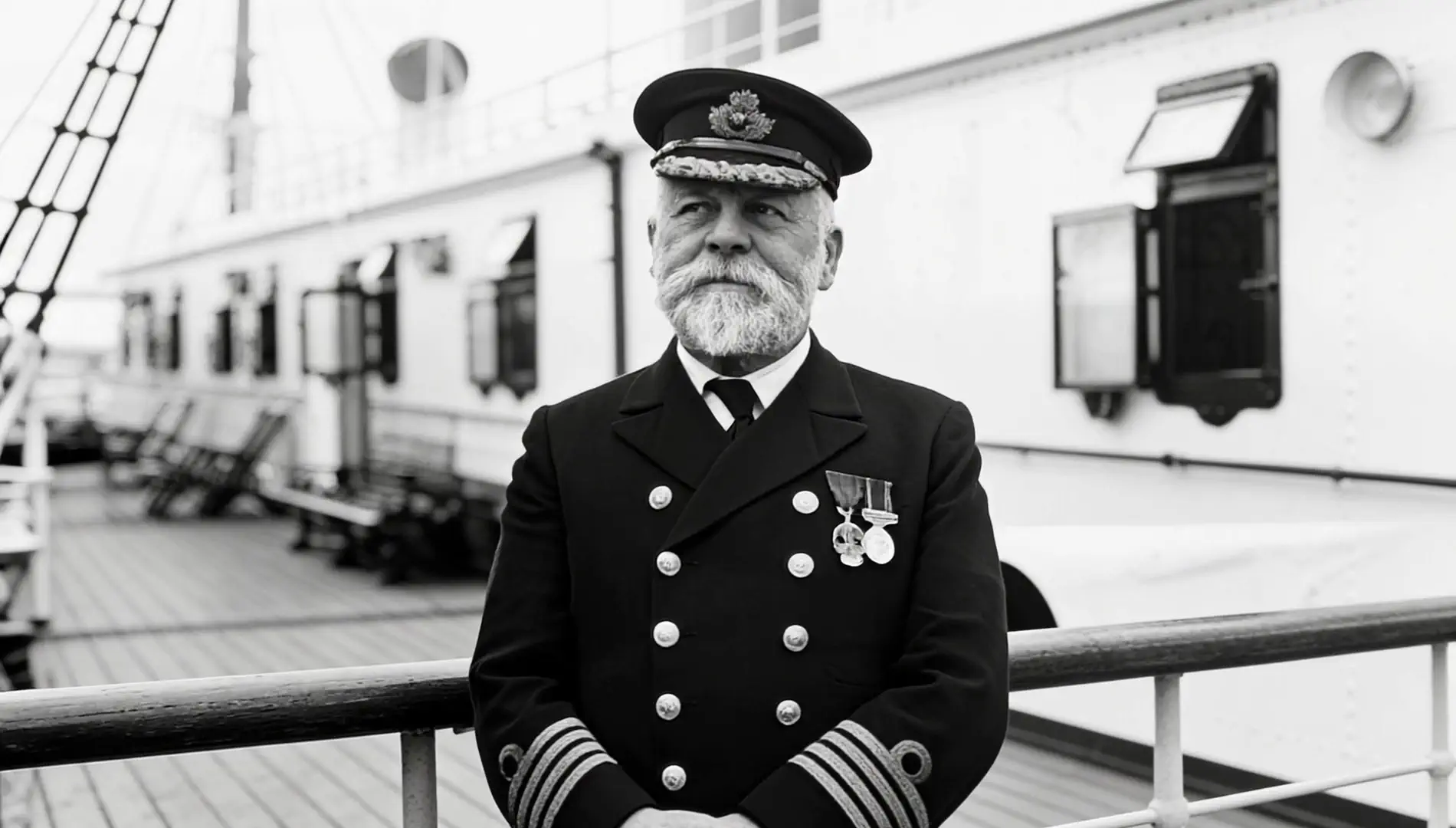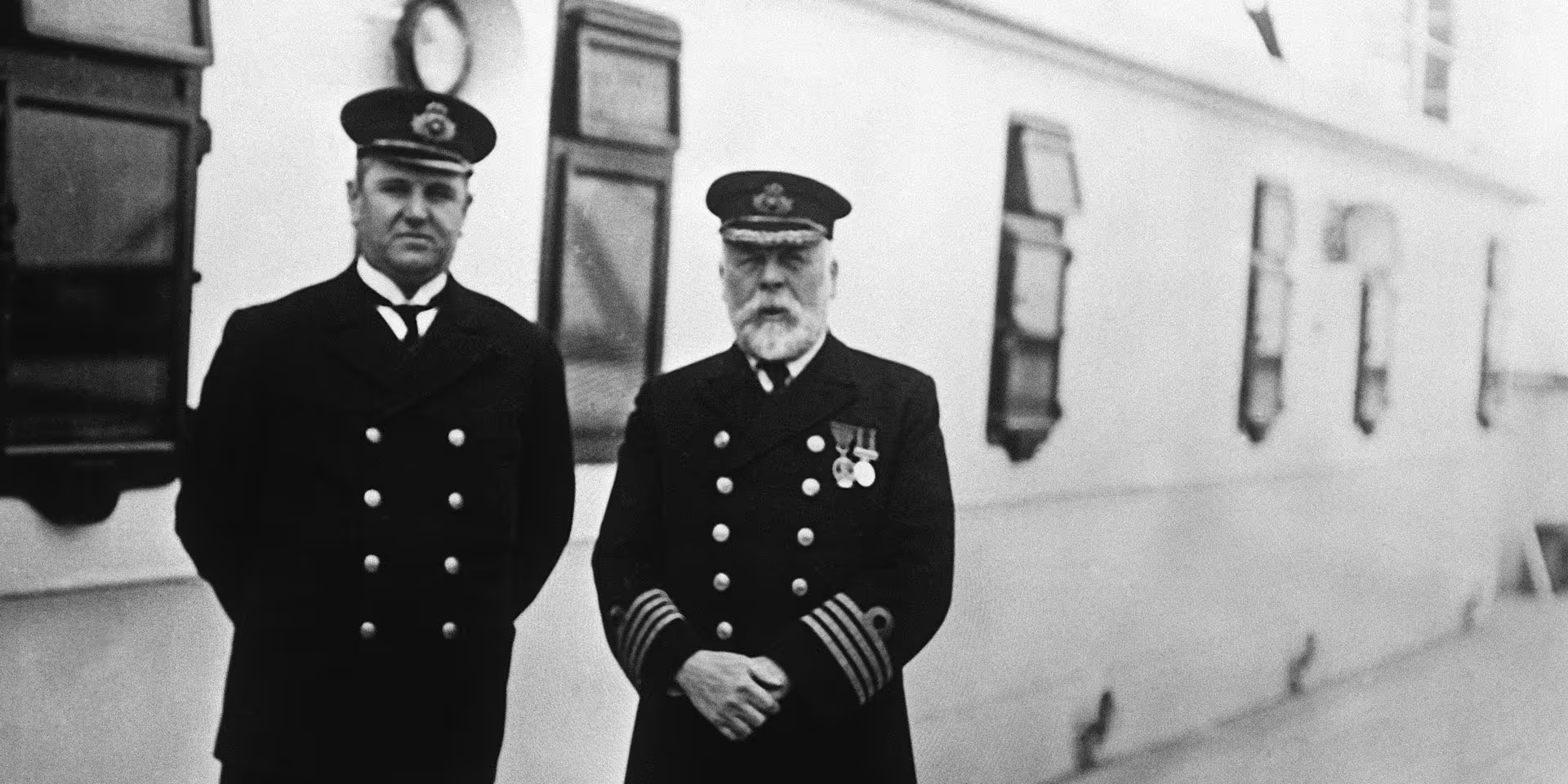
Edward John Smith – Captain of the Titanic
Captain Edward John Smith was born at Hanley, Stoke-on-Trent, on 27 January 1850, the son of potter Edward Smith and Catherine Smith. He attended the Etruria British School until the age of 13, when he left for Liverpool to begin a life at sea. After an apprenticeship with Gibson & Co. of Liverpool, he joined the White Star Line in 1880 and won his first command in 1887. Over the following decades he commanded some of the company’s most prestigious liners, among them the Republic, the Coptic, the Majestic, the Baltic, the Adriatic and the Olympic, and served with distinction commanding troopships during the Boer War.
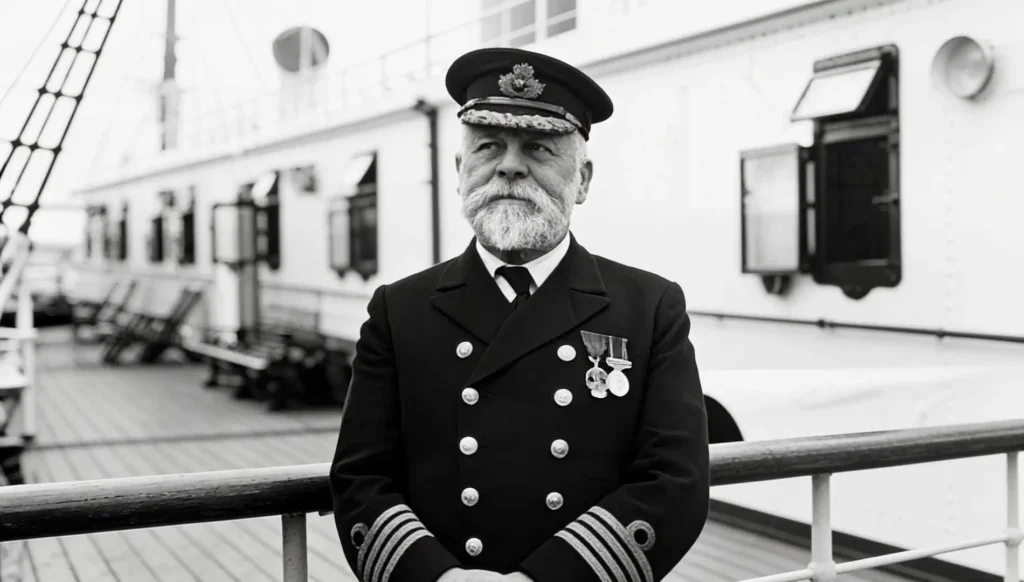
A Captain of Quiet Flamboyance
As he rose through the ranks, Smith earned a reputation among passengers and crew for calm, understated authority — some travellers would only cross the Atlantic aboard a ship he commanded. As the most senior captain in the White Star fleet, it became routine for him to take the helm of each new flagship on her maiden voyage. He married Eleanor and the couple had a daughter, Helen Melville; the family lived in a twin-gabled red-brick house called „Woodhead“ on Winn Road, Portswood, Southampton.
Boarding the Titanic
- On 10 April 1912, Smith took a taxi from his home to Southampton docks, wearing a bowler hat and a long overcoat. He came aboard the Titanic at 7:00 am, ahead of the Board of Trade muster at 8:00 am, and immediately went to his cabin to receive the sailing report from Chief Officer Henry Wilde.
- Shortly after departure at noon, the suction from the Titanic’s propellers caused the laid-up liner New York to break from her moorings and swing towards the ship. Smith’s quick action helped avert a collision — an echo of the incident in 1911 when the warship Hawke struck the Olympic, also under his command, and one some later saw as an ill omen for the voyage.
The Night of 14 April
- Smith normally took his meals at a small table in the dining saloon or in his cabin, attended by his personal valet, Arthur Paintin. On the night of 14 April, however, he attended a dinner party held in his honour by George Widener and his family, attended by much of high society travelling aboard. Aware that the ship was entering an ice field about which he had received repeated warnings over the preceding days, he excused himself early and returned to the bridge, where he discussed the conditions with Second Officer Charles Lightoller before retiring for the night, asking to be alerted at once if there was any cause for concern.
- At about 11:40 pm, Smith was woken by the collision with the iceberg and rushed to the bridge. He received First Officer William Murdoch’s report of the accident and made a swift inspection of the ship together with the Titanic’s designer, Thomas Andrews. He ordered the lifeboats prepared, but hesitated over giving the order to load and lower them — Lightoller had to press him for it before he finally agreed.
Final Hours
Remarkably little is known with certainty about Smith’s actions during the ship’s final two hours. The decisiveness that had defined his long career seems to have deserted him; witnesses recalled him as curiously hesitant and subdued. He was last seen in the area of the bridge, having given the final order to abandon ship, and appears to have made no attempt to save himself. His body, if it was ever recovered, was never identified.
Legacy
A large memorial statue of Captain Smith, sculpted by Lady Kathleen Scott — widow of the Antarctic explorer Captain Robert Falcon Scott — was unveiled by his daughter Helen in Lichfield, England, on 29 July 1914. A memorial plaque placed on Hanley Town Hall in 1913 was later moved to Etruria Middle School, close to the school he had attended as a boy. His widow, Eleanor, remained in Southampton for some years before moving to London, where she died in 1931 after being struck by a taxi near her home.
Source: Encyclopedia Titanica, „Captain Edward John Smith“.